Calculate Your Alpe du Zwift Time
Using real Zwift data to predict your climb time for the iconic 21 hairpins of Alpe du Zwift.
Your Information
Enter your weight and the power you can sustain for the duration of the climb.
Your Results
Based on your weight and power, here's your estimated time to climb Alpe du Zwift.
Calculating...
Data Behind the Calculator
Our calculator is based on real data from ZwiftPower.com, with information averaged across male/female riders, different age groups, and weight ranges to represent the whole Zwift population.
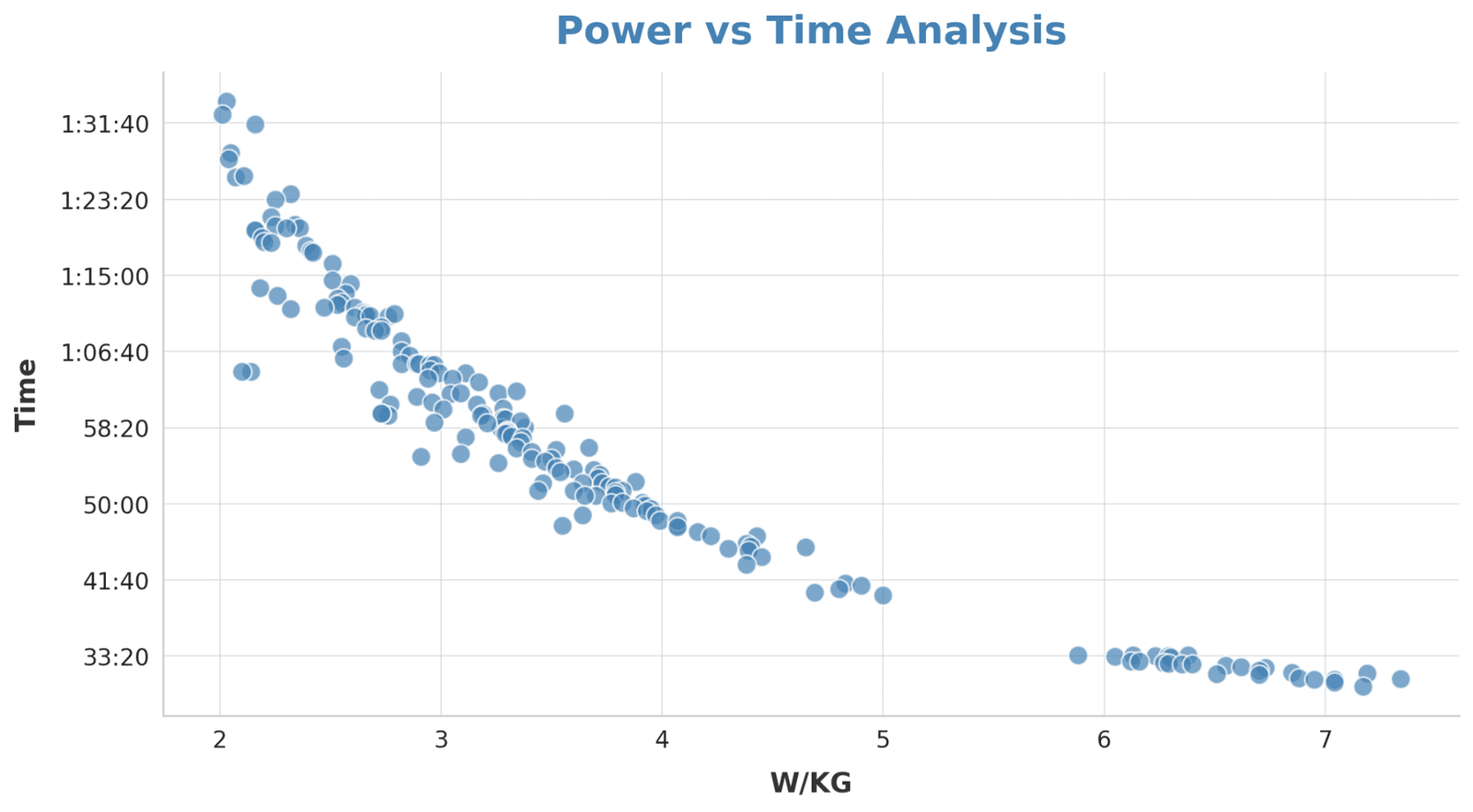
Note: The calculator is based on data up to 7.5 W/kg, so estimates beyond that may not be realistic based on real-life data.
How the Alpe du Zwift Calculator Works
Our Alpe du Zwift calculator uses real ZwiftPower performance data to accurately predict your climbing time based on your power-to-weight ratio. Unlike generic cycling calculators, our formula is specifically calibrated for Zwift's virtual environment and the unique characteristics of Alpe du Zwift.
The Formula
Our calculation uses a polynomial regression model derived from analyzing hundreds of verified ZwiftPower ride performances:
This polynomial relationship accounts for the non-linear relationship between power-to-weight ratio and climbing speed, which becomes more pronounced at higher gradients and power outputs.
Data Sources and Methodology
The formula was developed through statistical analysis of verified ZwiftPower ride data across a wide range of power outputs:
- Analyzed hundreds of verified Alpe du Zwift performances
- Power range: 2.5 W/kg (recreational) to 6.5 W/kg (elite)
- Time range: ~40 minutes (elite) to ~120 minutes (casual)
- Polynomial regression ensures accuracy across all power levels
The model accounts for Zwift's simplified physics engine, which differs from real-world cycling in several ways: aerodynamic drag is simulated but simplified, equipment weight affects performance, and drafting effects are minimal on steep climbs like Alpe du Zwift.
Accuracy and Limitations
Our calculator provides estimates accurate to within approximately ±2-3% for most riders when:
- Power output is maintained consistently throughout the climb
- Standard Zwift equipment is used (not extreme weight differences)
- No drafting assistance is received (solo effort)
- No PowerUps are used that significantly affect weight or aerodynamics
Factors that may affect actual times:
- •Equipment choice and virtual weight (Tron bike vs. heavier frames)
- •Drafting effects if riding in a group (minimal on steep sections)
- •Variable power output vs. steady power (surges waste energy)
- •PowerUps used during the climb (Feather reduces weight)
- •Pacing strategy (starting too hard leads to fatigue)
- •Mental fatigue and motivation levels
Realistic Power-to-Weight Ratios:
- •Beginner/Casual: 1.5-2.5 W/kg (90-120+ minutes)
- •Intermediate: 2.5-3.5 W/kg (65-90 minutes)
- •Advanced: 3.5-4.5 W/kg (50-65 minutes)
- •Elite/Cat 1: 4.5-5.5 W/kg (40-50 minutes)
- •Professional: 5.5-6.8 W/kg (35-40 minutes)
- •World Tour/Record: 6.8-7.5 W/kg (30-35 minutes)
Note: Values above 7.5 W/kg for a sustained climb like Alpe du Zwift exceed human physiological limits and have never been achieved in verified competition. The calculator will indicate if your input exceeds realistic parameters.
Alpe du Zwift Facts
- •Distance: 12.2km
- •Elevation Gain: 1,036m
- •Average Gradient: 8.5%
- •Hairpins: 21 switchbacks
- •KOM Record: 31 minutes
- •Inspired by: Alpe d'Huez
- •Unlockable Item: Lightweight Meilensteins
- •Pro W/kg: 5.5-6.8 W/kg sustainable
- •Badge: "Masochist" for 25 completions
What Is Alpe du Zwift?
Alpe du Zwift is a virtual recreation of the legendary Alpe d'Huez, one of the most iconic climbs in professional cycling. Found in Zwift's "Road to Sky" route, Alpe du Zwift offers 21 hairpin bends—just like its real-world counterpart. Riders face a challenging ascent that truly tests their climbing ability, stamina, and mental toughness. Whether you're training for real-life mountains or just looking to push your limits in an engaging digital world, Alpe du Zwift provides an authentic climb experience with all the excitement of gamified cycling.
How This Calculator Works
Our Alpe du Zwift calculator uses a specially developed formula based on regression data from sites like ZwiftPower. By inputting your weight (in kilograms) and average power (in watts), the calculator determines your approximate time to conquer Alpe du Zwift. Essentially, the formula factors in how many watts per kilogram (W/kg) you're able to sustain, alongside typical in-game physics. This allows us to predict your Alpe du Zwift time with impressive accuracy, giving you valuable insights into your training progress and pacing strategies.
Why Weight & Power Matter
In Zwift, just like in the real world, weight and power output directly influence your climb time. This is often expressed as W/kg (watts per kilogram)—the higher your W/kg, the faster you ascend. Carrying extra weight means you'll need more power to maintain the same speed. Conversely, riders producing higher power relative to their weight will scale the mountain more quickly. Keeping an eye on W/kg is key to improving your Alpe du Zwift time and becoming a stronger cyclist overall.
Calculate Your Alpe du Zwift Time
Ready to see how quickly you can conquer Alpe du Zwift? Simply enter your weight and average power in the calculator, and you'll get an instant result in minutes. This fast, user-friendly tool helps you:
- Track your progress by comparing climb times across different training blocks.
- Set realistic goals for personal records (PRs) and major time milestones, like breaking the one-hour mark.
- Motivate yourself with achievable benchmarks, taking small steps toward faster climbs.
Tips for Faster Climbs
- Pacing Strategy: Start at a sustainable power output. Going too hard too early often leads to burnout before reaching the summit.
- Gear Selection: Use a comfortable gear ratio to maintain cadence without spiking your power unnecessarily.
- Steady Effort: Aim for an even distribution of effort throughout the climb, avoiding big power surges on each hairpin.
- Trainer Calibration: Make sure your smart trainer is properly calibrated so you're getting accurate power data.
- Consistency & Recovery: Consistent training with adequate recovery days helps build the endurance and strength required for a solid Alpe du Zwift time.
Alpe du Zwift in Under 60 Minutes
Breaking the 60-minute barrier on Alpe du Zwift is a coveted achievement for many cyclists. Hitting this milestone requires dedicated training, smart pacing, and effective weight management—every extra kilogram and lost watt matters. To achieve a sub-60 minute time, riders need to maintain a minimum of 3.2 W/kg throughout the climb. Here are a few additional pointers to help you go sub-60:
- Boost Your Threshold: Focus on improving your Functional Threshold Power (FTP) with structured interval sessions.
- Optimize Body Composition: Lower body weight (without compromising health) to maximize W/kg.
- Mental Preparation: Enter the climb with confidence, visualizing success to help push through tough sections.
- Use Real-Time Data: Monitor your power and heart rate closely to stay on target during the climb.
Whether you're aiming for your first full ascent or chasing that elusive one-hour finish, our Alpe du Zwift calculator provides the insights you need to reach the summit faster—and with a clear plan in place. Ride on!
Ready to Take on the Challenge?
Now that you know your estimated time, hop on Zwift and conquer Alpe du Zwift!
Want to Improve Your Time?
Check out our comprehensive guide with pacing strategies, training tips, and in-game tactics to help you conquer Alpe du Zwift faster.
Read: Conquer the Alpe du Zwift: Tips for a Faster Climb