A 7-day training week is convenient for calendars, but it's not always the best rhythm for your body.
A 10-day training block gives you a bigger canvas. You can place hard sessions with more breathing room. You can fit in quality cycling and running without stacking fatigue in a way that quietly wrecks your legs. And if you're training for triathlon (or you simply like mixing biking and running), 10 days can feel like the first schedule that actually makes sense.
This article gives you a complete, practical 10-day Zwift-focused training week that includes Zwift rides + real-world running + (optional) outdoor biking, designed to build fitness without burning you down.
No "Part 1 / Part 2," no robotic lists that pretend everyone has the same life. You'll get:
- a clear 10-day plan you can repeat
- how hard each session should feel
- how to adjust it if you're tired, busy, or traveling
- how to fuel it properly without turning nutrition into homework
- how to measure progress
- how to avoid the common mistakes that make indoor-heavy training fail
Let's build a plan that actually works.
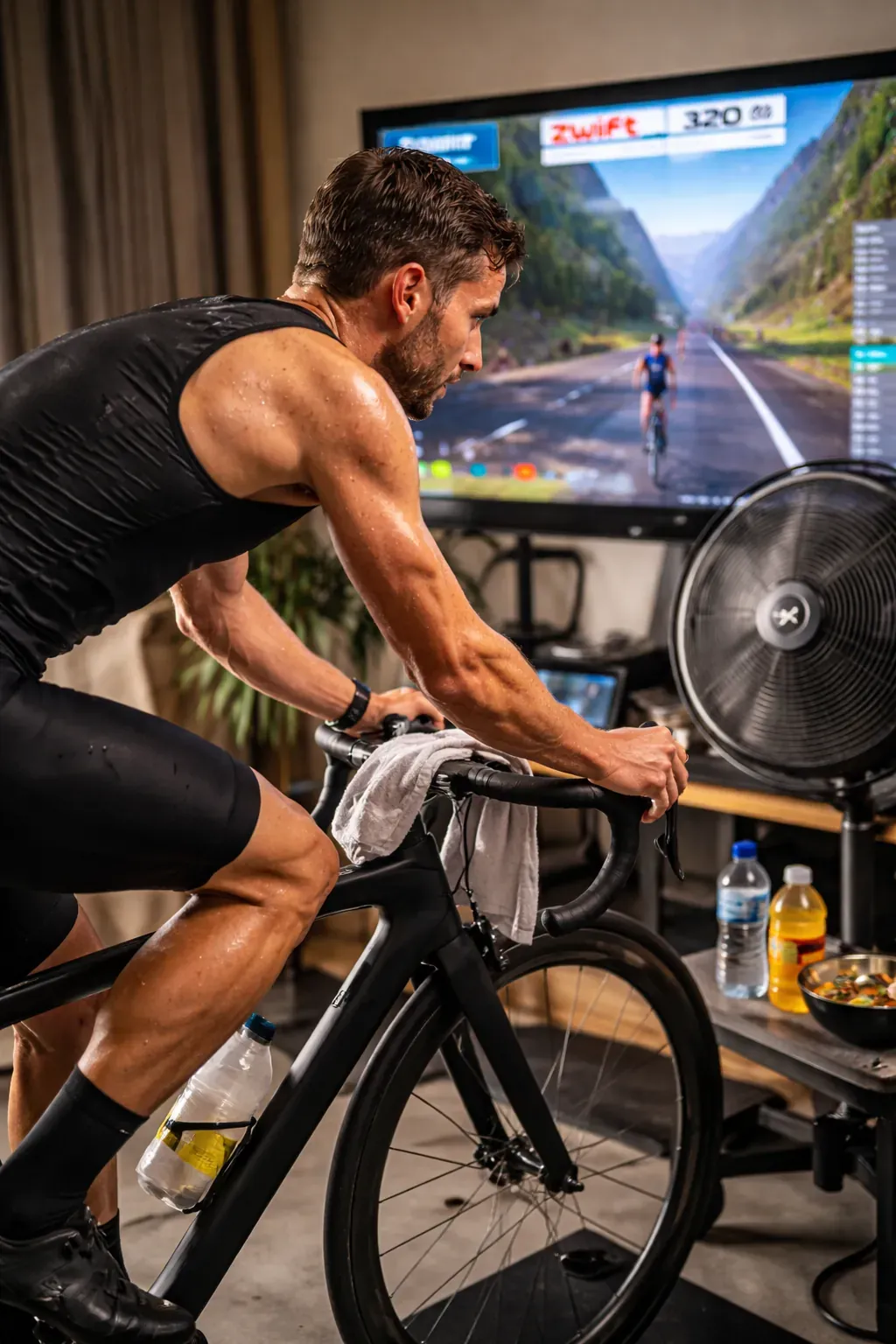
Why 10 days works so well for Zwift + running
Indoor riding is efficient. Almost too efficient.
Zwift makes it easy to stack hard sessions because:
- no weather stops you
- no traffic forces rest
- the workout is right there
- you feel "productive" every time you ride
But the body doesn't care how convenient your trainer is. It cares about recovery.
A 10-day block lets you keep two or three key cycling sessions while placing runs in a way that protects your legs. This is especially useful if:
- you're doing triathlon-style training
- you want to improve running without losing cycling fitness
- you get sore calves/hamstrings when you run after hard biking
- you struggle with fatigue when you follow a strict 7-day schedule
The goal is simple: more quality, less chaos.
The core idea of this plan
You'll train around three "anchors" across 10 days:
Cycling anchors (Zwift)
- one threshold session (strong, steady work)
- one VO₂ or "hard" session (shorter, sharper)
- one longer endurance ride (volume + durability)
Running anchors (outside or treadmill)
- one quality run (tempo or intervals, depending on level)
- one longer easy run (aerobic and resilient)
- one short brick run (to teach your legs the transition)
Everything else supports those anchors: easy rides, recovery, mobility, and optional outdoor riding.
This plan is written so you can repeat it as a cycle: Day 1 becomes Day 1 again after Day 10.
Intensity guide (so you don't overcook yourself)
Because everyone's numbers differ, use effort as your main guide.
Easy / Recovery
- breathing is calm
- you can talk in full sentences
- legs feel better after than before
Endurance
- steady, comfortable
- you can talk in short sentences
- you could hold it for a long time
Tempo
- purposeful
- talking becomes harder
- you're working, but not dying
Threshold
- controlled suffering
- you can hold it, but you must focus
- you finish feeling "spent but not destroyed"
VO₂ / High intensity
- short repeats
- deep breathing quickly
- hard to hold power/pace without discipline
If you track heart rate or power, great. If not, this still works.
The 10-day Zwift training week (with running + biking)
You'll see "Zwift" and "Run" most days. Running volume can be adjusted down if you're primarily a cyclist. If you're more runner-heavy, you'll tweak the bike volume slightly.
Day 1 - Zwift Threshold Builder + short easy run (optional)
Zwift: threshold intervals (45-70 min total)
This is your first key session. Controlled. Repeatable. Not a death match.
Good structure:
- warm-up 10-15 min
- 3 × 10 min at "hard but controlled" with 4-5 min easy between
- cool-down 10 min
If you're more advanced:
- 2 × 20 min threshold
- or 4 × 8 min slightly above threshold
Run (optional): 20-30 min easy
This is not a workout. It's a "keep the habit" jog. If your legs feel heavy, skip it.
Why this day matters: threshold work is the backbone of cycling fitness. It teaches you to hold strong effort without cracking.
Day 2 - Easy Zwift spin + mobility
Zwift: 30-60 min easy
High cadence, light resistance. This should feel like recovery.
Mobility: 10-15 min
Hips, calves, glutes, ankles. If you run, do your calves a favor.
Why this day matters: Zwift can tempt you to go medium-hard every day. This day prevents that.
Day 3 - Run quality day + very easy Zwift (optional)
Run: quality session (choose one based on level)
Beginner/intermediate option:
- warm-up 10-15 min easy
- 4-6 × 3 min "comfortably hard" with 2 min easy jog
- cool-down 10 min
More advanced option:
- warm-up 15 min
- 20-30 min tempo (steady hard)
- cool-down 10 min
Zwift (optional): 20-40 min very easy
Only if it helps your legs recover. Keep it gentle.
Why this day matters: running fitness improves best with one focused session, not constant hard running.
Day 4 - Zwift VO₂ day (short and sharp)
Zwift: VO₂ intervals (45-65 min total)
Simple structure:
- warm-up 15 min
- 5 × 3 min hard (you're breathing deep) with 3 min easy
- cool-down 10 min
Alternative:
- 3 sets of 5 × 30 sec hard / 30 sec easy with long recovery between sets
Important: stop while you still feel in control. Indoors, it's easy to turn this into a war. Don't.
Why this day matters: VO₂ work raises your ceiling. It makes your threshold feel easier and improves your ability to handle surges.
Day 5 - Easy run + optional outdoor bike (adventure day)
Run: 30-60 min easy
Keep it relaxed. Soft surface if possible.
Optional outdoor bike: 60-120 min easy endurance
If weather is decent and you have time, go outside. Keep it peaceful. Enjoy nature. Don't chase speed.
Why this day matters: your body needs aerobic volume without stress. Outdoor riding also keeps handling skills alive.
Day 6 - Long Zwift endurance ride + fueling practice
Zwift: 90-150 min endurance
This is not meant to feel heroic. It's steady, patient time.
Make this ride "useful" by practicing:
- steady cadence
- position comfort
- fueling timing
Fueling target (simple):
- drink regularly
- eat a small carb source every 20-30 minutes
Why this day matters: endurance rides build durability. They also teach your stomach and your mind to stay calm for long sessions.
Day 7 - Full recovery or very easy movement
Choose one:
- complete rest
- 30 min easy walk
- 20-40 min recovery spin
- gentle swim if you do triathlon
Why this day matters: most people don't get fitter because they train too little. They fail because they recover too poorly.
Day 8 - Brick day (Zwift steady + short run)
This is the "triathlon brain" day, even if you're not racing triathlon. It's also great for anyone who wants strong legs that can switch tasks.
Zwift: 45-75 min steady endurance with 10-15 min "strong" near the end
Not full threshold. Think "firm pressure."
Then immediately:
Run: 15-30 min easy, smooth stride
Keep your first 5 minutes slow. Let the legs adapt.
Why this day matters: brick runs teach your legs to run with cycling fatigue without turning every run into suffering.
Day 9 - Zwift tempo / sweet spot + short easy run (optional)
Zwift: tempo or sweet spot (60-90 min)
Structure:
- warm-up 10-15 min
- 2 × 20 min "hard steady" with 5 min easy between
- cool-down 10 min
If you feel tired, reduce it to:
- 1 × 20 min
- or just do endurance and call it a win
Run (optional): 20 min easy if your legs feel good.
Why this day matters: this session adds high-quality volume without the stress of VO₂.
Day 10 - Long easy run (or run + easy spin)
Run: 60-90 min easy
If you're newer to running, make it 40-60 min.
If you're more cycling-focused and want less running:
- 40-60 min easy run
- plus 30-60 min easy Zwift spin
Why this day matters: this run builds aerobic resilience and mental steadiness. It also makes you better at handling fatigue.
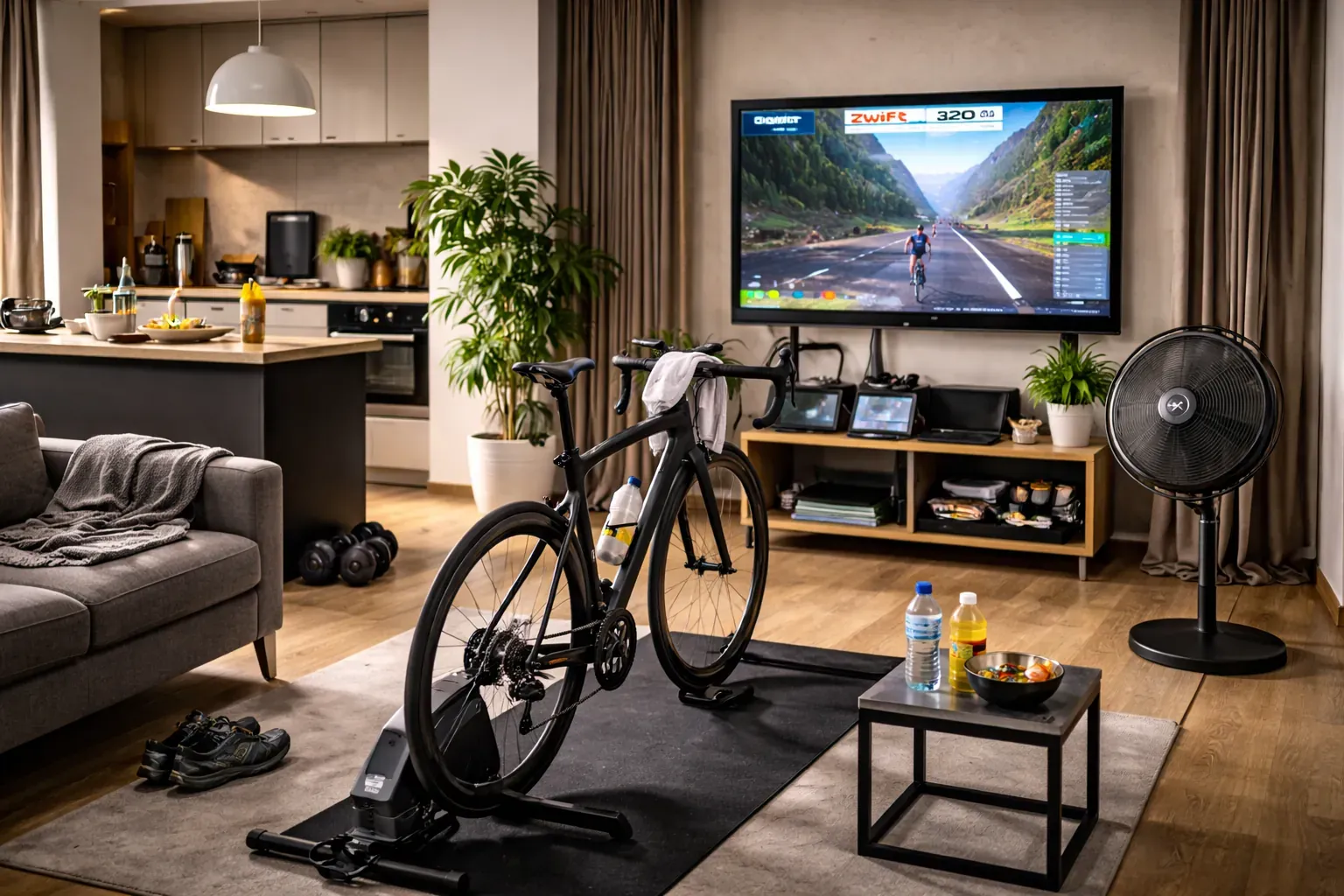
How hard is this plan, really?
It depends how you execute it.
This plan is designed so that:
- 3 key bike sessions are hard-ish (threshold, VO₂, tempo)
- 1 run is quality
- the rest is easy endurance or recovery
If you keep the easy days truly easy, you'll feel strong. If you "spice up" every easy day, you'll blow up by Day 6-8.
Most athletes don't fail from one too-hard workout. They fail from too many medium-hard days.
How to progress this plan over 4 blocks
A 10-day plan is easiest to progress in small, controlled steps.
Block 1 (Days 1-10)
Learn the rhythm. Don't chase big numbers.
Block 2 (Days 11-20)
Increase one thing:
- add 5-10 min total work to the threshold session
- or add one extra VO₂ interval
- or add 10-15 min to the long endurance ride
Only one upgrade at a time.
Block 3 (Days 21-30)
Upgrade another thing, but keep recovery strong.
Block 4 (Days 31-40)
Make it a lighter block:
- reduce interval volume by 30-40%
- keep endurance easy
- keep runs comfortable
Then restart with better fitness.
This is how you build without breaking.
Food and fueling for a 10-day Zwift + run plan (simple but effective)
You don't need a perfect diet. You need consistent basics.
Before harder sessions (threshold, VO₂, tempo, run quality)
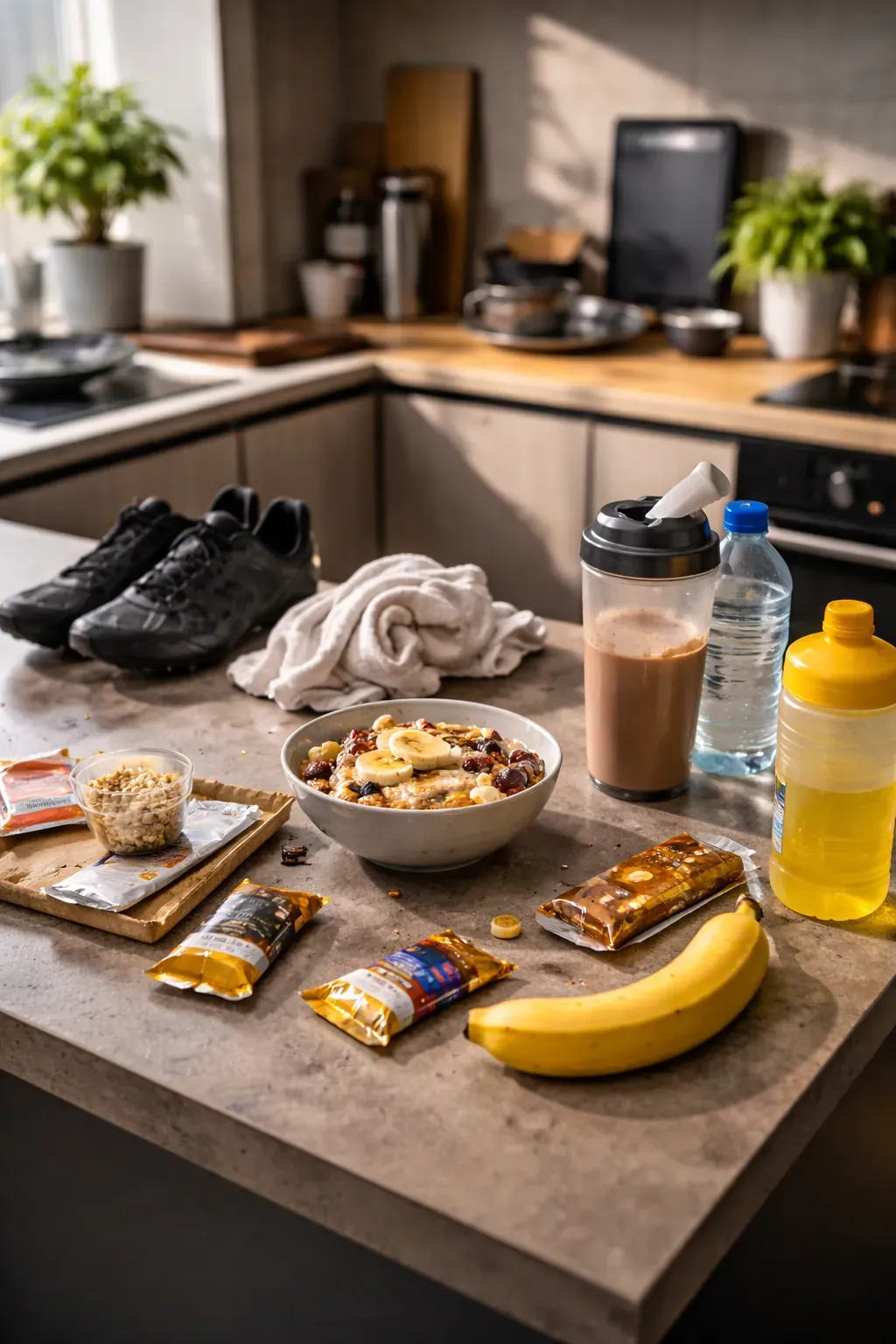
- eat carbs 1-3 hours before (even a simple meal)
- don't start "empty" unless you truly know what you're doing
Examples:
- oats + banana
- toast + honey + yogurt
- rice + eggs
- cereal + milk + fruit
During sessions
For rides longer than 75-90 minutes:
- take in carbs regularly (drink mix, gels, bars, bananas)
For runs:
- for most people, fueling during runs matters mainly once you're going beyond ~75-90 minutes
After sessions
Within a couple hours:
- protein + carbs
- drink water and replace salts if you sweat a lot indoors
Simple win:
- yogurt + fruit + cereal
- sandwich + milk
- rice + chicken
- pasta + tuna
The goal isn't perfection. It's making recovery automatic.
How to adjust if you're tired (without ruining the plan)
Fatigue happens. Life happens. This plan is meant to bend.
If you feel unusually tired:
- keep Day 2 easy
- shorten Day 4 VO₂
- make Day 6 endurance shorter
- turn Day 9 into pure endurance
- keep runs easy for a few days
The key principle:
Never delete recovery first. Delete intensity first.
You keep consistency by protecting your easy days.
Two versions of this plan (choose your focus)
If you're cycling-first
- keep all Zwift sessions
- reduce running to 2-3 runs across 10 days
- keep the long run shorter
- keep brick run very short
If you're triathlon / balanced
- keep 3-4 runs
- keep brick day
- keep outdoor bike option if possible
- keep long endurance ride steady and fueled
Either approach works. The structure stays the same.
Common mistakes that make a 10-day Zwift plan fail
Turning easy days into "just a little tempo"
This is the most common failure.
If you do:
- threshold Day 1
- hard run Day 3
- VO₂ Day 4
- tempo Day 6 because you got bored
- another hard ride Day 9
You'll be cooked.
Easy days are not a suggestion. They are the engine of consistency.
Not using a fan indoors
Indoor heat is a performance killer. If you can only improve one thing, improve cooling.
Fueling too little
Indoor training can suppress appetite. Then you underfuel. Then you sleep badly. Then you feel flat. Then you push harder to "fix it." Then you dig a hole.
Fuel like you train. Especially on long rides.
Running too hard off the bike
Brick runs are about smooth adaptation, not proving toughness.
How to test if you're improving
Repeatable markers:
- can you hold the threshold intervals more calmly?
- does your heart rate stay steadier at the same power?
- does your VO₂ session feel less chaotic?
- does your long endurance ride feel easier at the same pace?
- does the brick run feel smoother by the second and third cycle?
You don't need fancy testing. You need consistent references.
The point of a 10-day week
This is not just a plan. It's a mindset shift.
A 10-day week teaches you:
- to respect recovery
- to focus on quality, not daily intensity
- to become consistent without being fragile
- to build fitness in a way that supports both biking and running
If you repeat this block for a few cycles, you'll likely notice something important:
You'll feel more stable.
Not just fitter. More stable.
And that's what real endurance progress looks like.
About this article
Written by Christian Lassen Dam, who rides Zwift himself and builds every calculator on this site. Numbers here are either measured, and then linked to where they were measured, or modelled and estimated, and then labelled as such in the text. Spotted something wrong? Tell me and it gets corrected - the editorial policy explains how.
Related Articles
Continue reading with these related articles and guides:
Time of Day and Your Zwift Power: Finding Your Own Peak
Your power is not the same at 6 AM as at 6 PM, but nobody can tell you how large your own swing is. What actually moves across the day, why it moves, and a six-session protocol that measures the effect on you rather than on a study population.
What a Fixed Bike Does to Your Body That the Road Does Not
Outdoors you shift position constantly without noticing. Indoors the bike cannot move, so you stop moving too. What that does to your hands, knees, neck and lower back over a winter, and the changes that actually help.
Periodisation for Indoor Riders: Planning a Season on Zwift
Riding hard every week stops working after about two months. The three time scales a plan has to handle, a worked sixteen-week structure, how to plan backwards from a climb attempt, and why a permanent sweet spot block is the most common way to stall.
Power-to-Weight Ratio: Why It Decides Climbs and Little Else
Watts per kilogram predicts climbing speed because on a steep gradient nearly all your power goes into lifting your own mass. Where that stops being true, the two ways to move the ratio and why they are not equal, and the point at which chasing it backfires.
Run your own numbers
Every calculator on this site runs in your browser and publishes the equation behind it: