Altitude takes power away before you turn a pedal, and no amount of indoor training gives it back.
That is the uncomfortable starting point for anyone planning a mountain trip. You can arrive in the best form of your life and still find yourself riding 10% below the numbers you have spent all winter building, for reasons that have nothing to do with fitness and everything to do with the air.
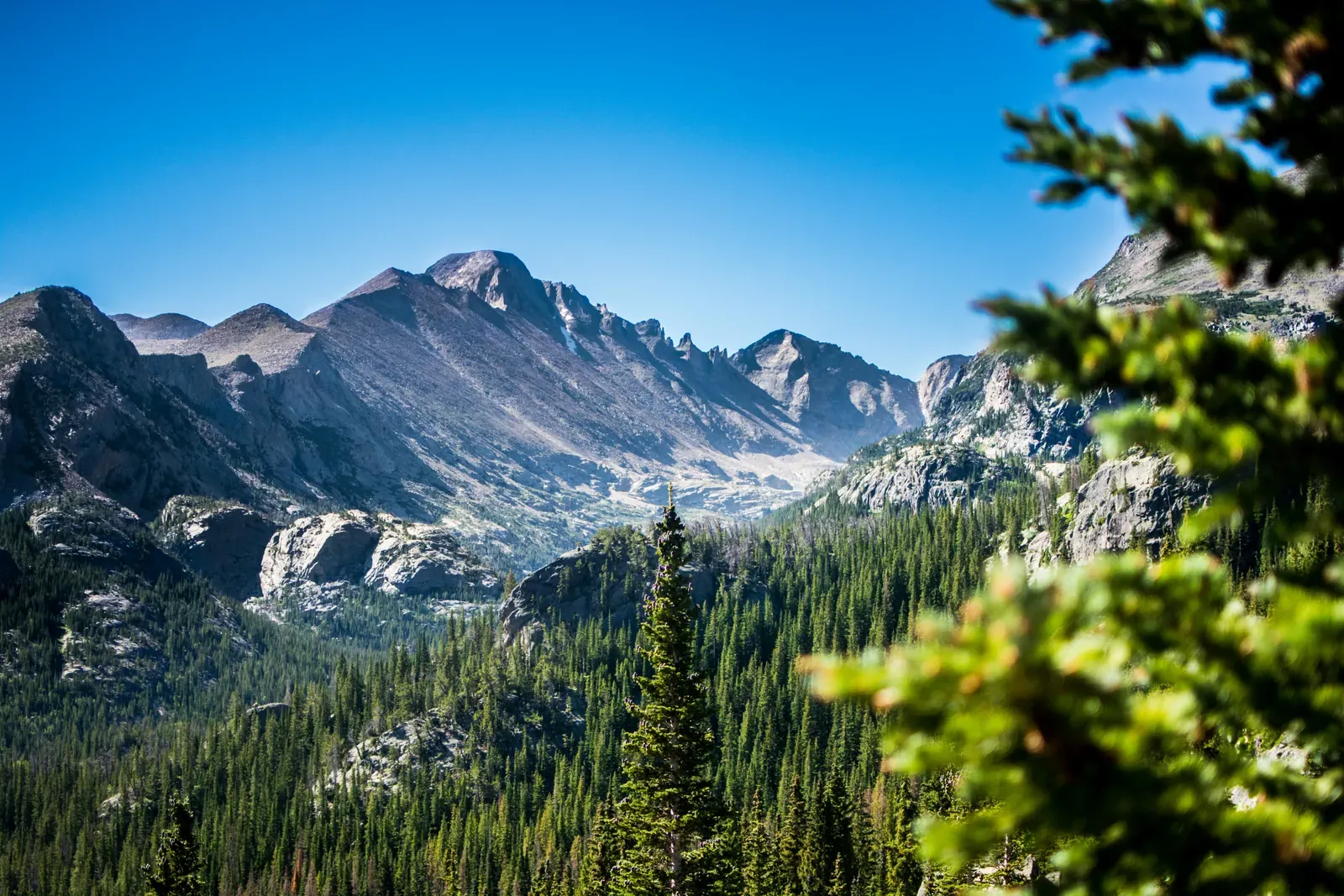
I use Colorado as the example because it is the trip a lot of riders make: passes well above 3,000 m, reachable by ordinary amateurs, with a strong tradition of people going out too hard on day one. I have not ridden there. What I can do is the arithmetic on what thin air costs, what does and does not transfer from indoor training, and how to set a target that is not a fantasy.
What thin air actually costs
The air at altitude is not short of oxygen as a proportion. It is still about 21% oxygen at 3,000 m, the same as at sea level. What has changed is the pressure driving that oxygen across your lung membranes.
Barometric pressure at sea level is around 1,013 hPa. At 3,000 m it is around 700 hPa, roughly 69% of it. The oxygen fraction is unchanged, so the partial pressure of oxygen falls in the same proportion, and it is partial pressure, not percentage, that determines how much oxygen ends up in your blood.
The broadly accepted figure in exercise physiology is that maximal oxygen uptake declines by somewhere around 6 to 8% per 1,000 m above roughly 1,500 m. It is a range rather than a constant because individual responses vary enormously, and it is not something measured on this site. Taken at face value it puts a rider at 3,000 m somewhere in the region of 9 to 12% down on their sea-level ceiling.
Sustained sub-threshold power is affected less than maximal efforts are, which is genuinely good news and which shapes everything below.
What a 10% power loss is worth in minutes
Percentages are hard to feel. This site has a fitted curve for Alpe du Zwift built from about 500 verified finishing times, and although the Alpe is a virtual climb at virtual sea level, the curve is a perfectly good translator from a power change into a time change on a long climb. The methodology is written up in the regression article.
time in seconds = 148.60 × (W/kg)² − 1954.08 × (W/kg) + 8329.87
At 3.20 W/kg: about 59:58, the familiar sub-hour benchmark
At 2.88 W/kg, which is 10% less power: about 65:35
A 10% power loss costs roughly 5 minutes 36 seconds on a climb of this length. On a longer mountain pass it costs proportionally more.
That is the number to plan around. Not "I will be a bit slower", but "the climb I have been imagining as a one-hour effort is a sixty-five to seventy minute effort, and I should pace it as one".
The equation is a model of a specific virtual climb, so treat this as a translation aid rather than a prediction of your time on a real mountain. What it gets right is the shape: a small power loss costs more time than people expect, and it costs more the slower you already are.
Your heart rate stops meaning what it used to
This is the single most practically important thing to understand before a mountain trip, and it is where riders who train by heart rate get into trouble fastest.
At altitude, less oxygen arrives per unit of blood, so your body moves more blood to compensate. Your heart rate at any given power is therefore higher than it would be at sea level. Meanwhile your maximum heart rate tends to be slightly lower. The whole scale has been squashed and shifted, and the zones on your head unit are describing a rider who is not currently present.
The practical consequences, in order of how much trouble they cause:
- Riding to your sea-level heart rate zones will have you going too hard. The same perceived zone is now a harder effort in real terms.
- Power is the more honest guide, if you have it, because a watt is a watt regardless of the air. It just costs you more.
- Perceived effort is the most honest of all. On a first mountain trip I would ride to breathing and legs, and treat both screens as information rather than instruction.
The one thing that genuinely transfers
You cannot train the altitude response indoors. Zwift does not simulate air density, hypoxic tents are a different subject entirely, and nothing about a garage in a lowland country prepares your blood chemistry for 3,000 m.
What does transfer, completely, is the ability to hold a sub-threshold effort for a very long time without it degrading. And that turns out to be most of what a mountain pass asks for, because the pass is going to force you to ride sub-threshold whether you planned to or not.
This reframes the whole preparation. A rider heading to the mountains does not need more VO2 work. They need to be extremely comfortable at 65 to 80% of FTP for two hours at a time, because that is the effort a long climb at altitude will permit, and the person who can sit there calmly will ride past the person with the higher ceiling who cannot.
A Zwift block for mountain preparation
Eight weeks, three key sessions a week, everything else easy. The bias is deliberately towards long sustained work rather than intensity.
| Session | What it is | Why it is in here |
|---|---|---|
| Long climb | Alpe du Zwift or Ven-Top, ridden whole at a genuinely steady effort | Rehearses an hour or more of uninterrupted climbing, which almost nothing else does |
| Sustained tempo | 3 × 20 min at 75 to 85% of FTP, building to 2 × 40 min | Builds the ability to sit in the zone the mountain will hand you |
| Long endurance | 2 h 30 to 4 h, easy, fuelled properly | Durability, and rehearsal of eating on a long day |
Ride the long climb sessions on the actual climbs rather than on a flat route at climbing power. The gradient changes your position, your cadence and where the effort sits, and none of that is reproduced by a flat road. There is a longer argument for this in the route selection article.
If you want a target for the block, take your intended climb, estimate the sustained power you think you can hold for it, subtract 10%, and make that number comfortable for ninety minutes indoors. If you can do that, you will get up the pass.
The first few days at altitude
Acclimatisation is a real physiological process and it is not fast. The broad picture, which is well established and not controversial:
- Days 1 to 3 are the worst. Breathing rate is up, sleep is often poor, and performance is at its lowest. Riding hard here is close to pointless.
- The first week brings partial adaptation. Plasma volume adjusts, breathing settles, and things start feeling more normal.
- Full adaptation takes weeks. Longer than any normal holiday, so plan around being partly adapted rather than fully.
- Hydration needs go up. Dry air and higher breathing rates mean more fluid lost through respiration alone.
If your trip includes a big objective, put it late in the week rather than early. The version of you that arrives on day six is meaningfully better than the one that landed on day one.
If you feel genuinely unwell rather than simply unfit, that is altitude sickness and it is a medical matter rather than a training one. Descending is the treatment, and it is not something to negotiate with.
Gearing, which decides whether you ride or walk
This is the most under-considered part of a mountain trip and it is entirely solvable with arithmetic before you travel. Indoors a bad gear choice is an annoyance. On a real 10% ramp at 3,000 m it is the difference between turning the pedals and pushing the bike.
Work it out in two steps. First, how fast will you actually be going? On a climb, nearly all your power goes into lifting your mass, so speed is roughly power divided by the weight being lifted per second:
v ≈ P ÷ (m × g × gradient)
A 75 kg rider at sea level holding 225 W on 8%: 225 ÷ (75 × 9.81 × 0.08) ≈ 3.8 m/s, about 13.8 km/h
The same rider at altitude, 10% down at 202 W, on a 10% ramp: 202 ÷ (75 × 9.81 × 0.10) ≈ 2.7 m/s, about 9.9 km/h
Rolling resistance and drag shave a little off both, so treat these as slightly optimistic.
Now turn that into a cadence. A 700c wheel with a 25 mm tyre rolls about 2.1 m per revolution, so the distance you travel per pedal stroke is 2.1 multiplied by your chainring divided by your sprocket.
| Gearing | Metres per pedal stroke | Cadence at 9.9 km/h |
|---|---|---|
| 34 × 28 | 2.55 m | about 65 rpm |
| 34 × 32 | 2.23 m | about 74 rpm |
| 34 × 34 | 2.10 m | about 79 rpm |
Sixty-five rpm on a 10% gradient, an hour into a climb, at altitude, is a genuinely unpleasant place to be. It is high force per stroke, it recruits fast-twitch fibres you would rather save, and it is the classic route to cramping. The same rider on a 34 × 34 is spinning at nearly 80 rpm at the identical speed and effort, and will arrive at the top in far better condition.
Run these numbers for the steepest gradient on your intended route, using your altitude-adjusted power. If the answer is below about 70 rpm, change your cassette before you travel. It is the cheapest performance improvement available on the entire trip.
What indoor training cannot help with at all
- The altitude response itself. Nothing on a trainer touches it.
- Descending a mountain pass. Long, cold, fast, and demanding in a way that has nothing to do with fitness.
- Temperature swings. A summit can be twenty degrees colder than the valley you left. That is a clothing problem and it is a serious one.
- Gearing. Indoors, a bad gear choice is an inconvenience. On a real 10% ramp at 3,000 m it decides whether you are riding or walking. Work out your gearing before you travel.
The example itself
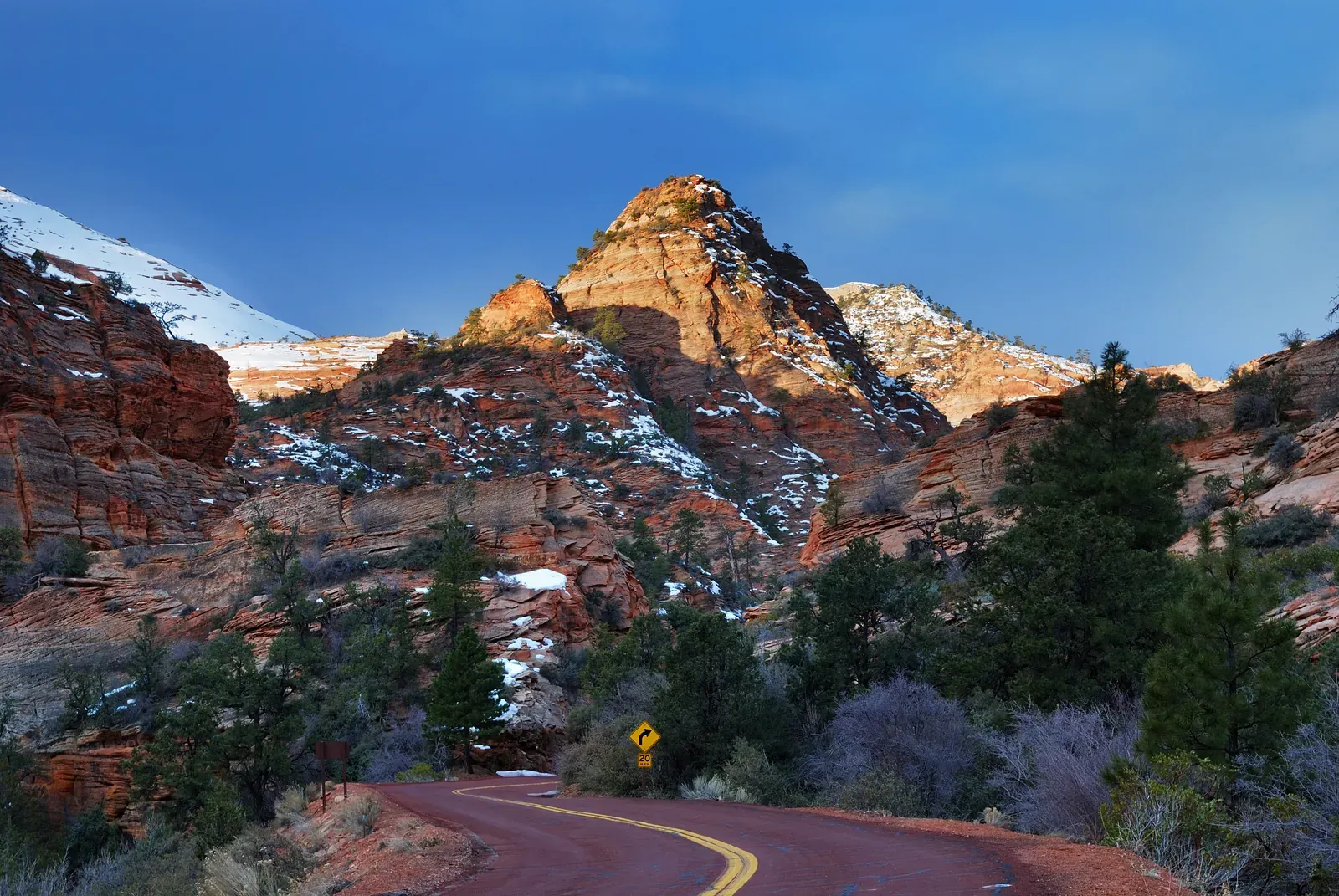
Colorado's road passes reach well above 3,000 m, with several paved climbs topping out higher than anything in the Alps, and the towns riders base themselves in are frequently at 2,000 m or more, which means you are at altitude before you start climbing. Weather changes fast at elevation and afternoon storms are a recurring theme in every account I have read, which is the usual reason for the advice to start early.
Beyond that I would be inventing local knowledge, and this site's editorial policy exists partly to stop me doing that. For the roads themselves, ask someone who rides them.
Riders who have actually been there
The short version
- Air at 3,000 m is still 21% oxygen, but at about 69% of sea-level pressure, and pressure is what moves oxygen into your blood.
- Expect roughly 9 to 12% off your ceiling at 3,000 m. On this site's Alpe curve, a 10% power loss is about 5 minutes 36 seconds on a one-hour climb.
- Heart rate zones lie at altitude. Ride to power or to breathing, not to your sea-level zones.
- The altitude response cannot be trained indoors. Sustained sub-threshold durability can, and it is most of what a pass demands.
- Days one to three are the worst. Put the big objective late in the trip.
- Run the gearing arithmetic before you travel. If your steepest gradient puts you under about 70 rpm, fit a bigger cassette. It is the cheapest gain available on the whole trip.
About this article
Written by Christian Lassen Dam, who rides Zwift himself and builds every calculator on this site. Numbers here are either measured, and then linked to where they were measured, or modelled and estimated, and then labelled as such in the text. Spotted something wrong? Tell me and it gets corrected - the editorial policy explains how.
Related Articles
Continue reading with these related articles and guides:
Time of Day and Your Zwift Power: Finding Your Own Peak
Your power is not the same at 6 AM as at 6 PM, but nobody can tell you how large your own swing is. What actually moves across the day, why it moves, and a six-session protocol that measures the effect on you rather than on a study population.
What a Fixed Bike Does to Your Body That the Road Does Not
Outdoors you shift position constantly without noticing. Indoors the bike cannot move, so you stop moving too. What that does to your hands, knees, neck and lower back over a winter, and the changes that actually help.
Periodisation for Indoor Riders: Planning a Season on Zwift
Riding hard every week stops working after about two months. The three time scales a plan has to handle, a worked sixteen-week structure, how to plan backwards from a climb attempt, and why a permanent sweet spot block is the most common way to stall.
Power-to-Weight Ratio: Why It Decides Climbs and Little Else
Watts per kilogram predicts climbing speed because on a steep gradient nearly all your power goes into lifting your own mass. Where that stops being true, the two ways to move the ratio and why they are not equal, and the point at which chasing it backfires.
Run your own numbers
Every calculator on this site runs in your browser and publishes the equation behind it: