A long touring day is an endurance problem, not a fitness problem, and most riders train for the wrong one.
The pattern is familiar. Someone plans a big day out on the bike, gets nervous about whether they are strong enough, and responds by adding intensity. Intervals, threshold sessions, a hard group ride at the weekend. Then the day comes and it turns out that six hours of easy riding with a dozen stops asks for almost nothing they trained, and quite a lot of something they did not.

Japan's Shimanami Kaido is the example here because it is close to the perfect version of this kind of day: long, mostly flat, spectacular, and best ridden slowly with frequent stops. I have not ridden it. The preparation, and the week afterwards, is what this article is actually about.
What a stop-often day actually asks for
A touring day and a training ride of identical distance are different events. Four things separate them.
- Total time on the bike is much longer than moving time. A six-hour ride can easily be an eight or nine hour day once stops are counted, and your body is out in it the whole time.
- You restart cold, repeatedly. Every stop lets muscles cool and stiffen. The first ten minutes after each one is harder than the ten minutes before it.
- Fuelling drifts. Long stops in the sun feel like meals but often are not, and the regular hourly intake that works on a training ride falls apart when the day has no rhythm.
- The intensity is genuinely low. Which sounds easy, and is exactly why people under-prepare for it. Low intensity for a very long time is its own demand.
None of that is trained by intervals. All of it is trained by time.
Why threshold work is the wrong preparation

Threshold training raises the ceiling. A touring day never approaches the ceiling. Raising it changes nothing about how the sixth hour feels.
What decides the sixth hour is a set of adaptations that come from duration rather than from intensity: how much fat you can use at a given effort, how comfortable your position stays over time, how well your gut keeps working, and how used your head is to simply continuing. Those are built by riding for a long time at an easy pace, which is unglamorous and therefore widely skipped.
There is a further reason to keep the intensity down in the weeks before a trip, which is that arriving tired is worse than arriving slightly undertrained. A big block finished three days before you fly leaves you carrying fatigue into a holiday. That is the argument made at greater length in the periodisation article.
A six-week build for a long touring day
The whole plan is one long ride a week that gets longer, plus enough easy riding around it to keep things ticking over. There is deliberately almost no intensity in it.
| Week | Long ride | What you are practising |
|---|---|---|
| 1 | 2 h easy | Holding a genuinely easy power without drifting up |
| 2 | 2 h 30 easy | Eating on a schedule rather than on appetite |
| 3 | 3 h easy, with two 10 min breaks off the bike | Restarting cold, which is the touring-specific bit |
| 4 | 90 min easy | Recovery week |
| 5 | 4 h easy, with three breaks | The rehearsal. Treat it as a dress run for the day |
| 6 | 2 h easy | Arrive fresh |
Week three is the session people are tempted to skip the breaks in, and the breaks are the entire point. Getting off the bike for ten minutes and then riding again is the specific thing a touring day does over and over, and it is genuinely unpleasant to practise indoors, which tells you something about how much harder it is than it sounds.
Riding easy on Zwift is harder than riding hard
This is the practical obstacle, and it deserves its own section because it defeats more people than the duration does.
Zwift is built to reward effort. Riders come past you and there is a pull to follow. Segments have timers on them. The category you are shown next to is a comparison whether you asked for one or not. The result is that easy rides quietly become moderate rides, moderate rides become tempo, and a training plan that looked polarised on paper turns into six weeks of the same middling intensity. That drift is the most common way indoor training goes wrong.
The things that actually work, in rough order of effectiveness:
- Use ERG mode with a low fixed target. Take the decision away from yourself entirely. This is the one that works when nothing else does.
- Ride a route where nothing is happening. No climbs, no sprint segments, no reason to press.
- Put something on that you actually want to watch. A film for the middle two hours makes an easy ride pass and makes it much less likely you will start racing strangers out of boredom.
- Set an upper power alarm rather than a target. The goal is a ceiling, not a number to hit.
- Ride without the leaderboards if you find them pulling at you. Nobody is watching.
A concrete definition of easy, since the word does too much work: you should be able to breathe through your nose and speak in complete sentences. In zone terms that is roughly 55 to 70% of FTP, which the FTP calculator will work out for you. If you finish the ride feeling like you could have done it again, that was correct.
The week after, which matters more than the week before
Riders plan the trip in detail and then plan nothing at all for the week that follows, which is where the fitness from the trip either gets absorbed or gets thrown away.
Two failure modes, and they are opposites. Some people take the whole week off, get stiff, lose rhythm and find it hard to start again. Others come back inspired and immediately do a hard session on legs that have absorbed several days of unaccustomed volume, which is a good way to get ill or injured.
Easy riding beats both. It moves blood through tired muscles, keeps the habit intact, and asks for nothing. A week that works:
- Days 1 and 2: nothing, or 30 minutes of very easy spinning if you feel like moving.
- Day 3: 45 minutes easy. Flat route, no segments, no company.
- Day 4: off.
- Day 5: 60 minutes easy with three 1-minute efforts at the end, purely to remind your legs what fast feels like.
- Day 6: off, or easy.
- Day 7: 90 minutes endurance. If this feels good, you are ready for normal training again. If it does not, take another easy week and do not argue with it.
The day-seven test is the useful part. It is an honest signal, and overriding it is the most common way a good trip turns into three bad weeks.
Why easy riding recovers you better than rest does
This claim gets made constantly and is rarely explained, which makes it sound like folklore. It is not, and the reasoning is worth having because it tells you how easy is easy enough.
Riding gently raises blood flow through the muscles that did the work without adding any meaningful new damage. More blood moving through tired tissue means faster delivery of what repair needs and faster removal of what it produces. Complete rest does neither. It is not that rest is harmful, it is that a very light ride does the same job plus something extra, at no cost.
There is a second and less physiological reason. Stopping entirely for a week breaks the habit, and the habit is worth more over a season than any individual session. Coming back after seven days off is disproportionately hard for reasons that have nothing to do with fitness, which barely moves in a week.
The condition attached to all of this is that easy has to actually mean easy. A recovery ride done at tempo is simply another training session, adding fatigue to a body that is trying to shed it, and it is the most common way a recovery week fails. If you cannot hold yourself back, use ERG at a low fixed target and let the trainer make the decision.
The mechanism above is standard exercise physiology rather than anything measured on this site, and the size of the effect is genuinely debated. What is not debated is the direction, or the fact that easy riding does not slow recovery.
The example itself
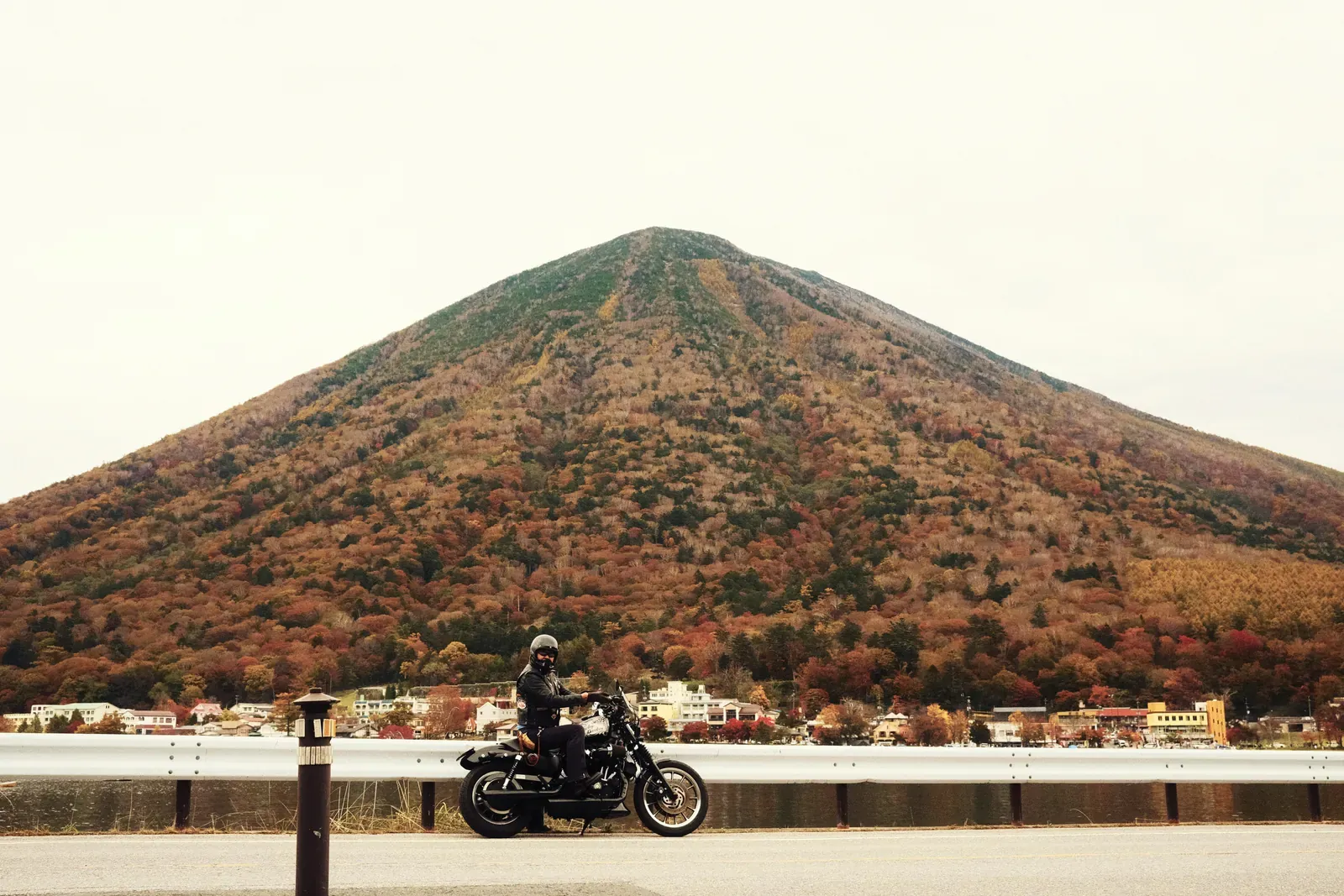
The Shimanami Kaido is a cycling route across the Seto Inland Sea in Japan, linking Honshu to Shikoku via a chain of islands and a series of bridges built with dedicated cycle paths. It is around 70 km end to end, is described consistently as mostly flat with gentle spiral ramps up to each bridge, and is signposted throughout. The recurring advice in every account is to allow far more time than the distance suggests, because the stopping is the point.
Seventy flat kilometres is well within a day for most riders who have done the build above. What makes it a long day is everything that is not pedalling, which is exactly why the preparation is about duration and restarting rather than about power.
Beyond that I have no first-hand knowledge, and the editorial policy on this site keeps me from inventing it.
Riders who have actually been there
The short version
- A touring day asks for duration, not intensity. Threshold work does not prepare you for it.
- Practise the stops. Restarting cold, repeatedly, is the touring-specific demand and it is genuinely harder than it sounds.
- Six weeks of one progressively longer easy ride a week is enough. Arrive fresh, not fit.
- Riding easy on Zwift is the hard part. Use ERG with a low target if discipline fails, and pick a route where nothing is happening.
- Plan the week after the trip. Easy riding beats both total rest and an enthusiastic return to intervals, and day seven tells you whether you are ready.
About this article
Written by Christian Lassen Dam, who rides Zwift himself and builds every calculator on this site. Numbers here are either measured, and then linked to where they were measured, or modelled and estimated, and then labelled as such in the text. Spotted something wrong? Tell me and it gets corrected - the editorial policy explains how.
Related Articles
Continue reading with these related articles and guides:
Time of Day and Your Zwift Power: Finding Your Own Peak
Your power is not the same at 6 AM as at 6 PM, but nobody can tell you how large your own swing is. What actually moves across the day, why it moves, and a six-session protocol that measures the effect on you rather than on a study population.
What a Fixed Bike Does to Your Body That the Road Does Not
Outdoors you shift position constantly without noticing. Indoors the bike cannot move, so you stop moving too. What that does to your hands, knees, neck and lower back over a winter, and the changes that actually help.
Periodisation for Indoor Riders: Planning a Season on Zwift
Riding hard every week stops working after about two months. The three time scales a plan has to handle, a worked sixteen-week structure, how to plan backwards from a climb attempt, and why a permanent sweet spot block is the most common way to stall.
Power-to-Weight Ratio: Why It Decides Climbs and Little Else
Watts per kilogram predicts climbing speed because on a steep gradient nearly all your power goes into lifting your own mass. Where that stops being true, the two ways to move the ratio and why they are not equal, and the point at which chasing it backfires.
Run your own numbers
Every calculator on this site runs in your browser and publishes the equation behind it: