Gravel is not road riding that happens to be harder. It is a different shape of effort, and that changes which sessions actually prepare you for it.
Riders planning a first gravel trip usually train for it the way they train for everything else, then find the ride demands something their preparation never asked for. The distance was right. The elevation was right. The problem was that the power file of a gravel day looks nothing like the power file of a road day, even when the averages match.
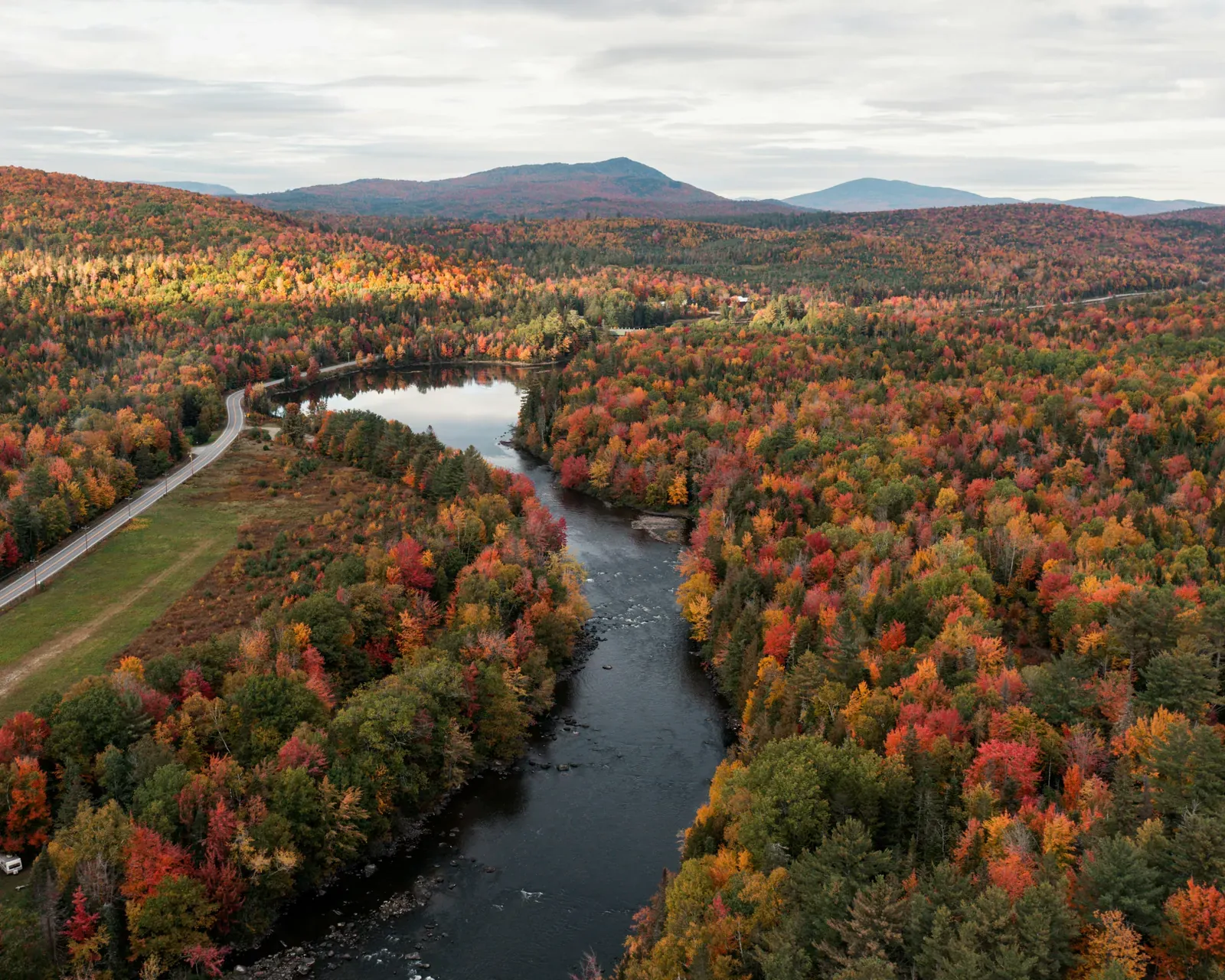
Vermont and upstate New York are the example, because that region genuinely offers both in the same place and forces the choice. I have not ridden there. What follows is about the physics of the surface and the training that follows from it, which travels perfectly well.
What the surface actually costs you
Start with the part that can be calculated rather than asserted. Rolling resistance is a force that depends on the coefficient of rolling resistance, the mass, and gravity:
Frolling = Crr × m × g and P = F × v
Take 85 kg of rider and bike, travelling at 25 km/h, which is 6.94 m/s.
Good road tyre on asphalt, Crr around 0.004: force 3.34 N, so about 23 W
Gravel tyre on loose gravel, Crr around 0.012: force 10.0 N, so about 69 W
A difference of roughly 46 W at the same speed, before anything else is taken into account.
Forty-six watts is a large number. For a rider with an FTP of 250 W it is nearly a fifth of threshold, spent purely on the surface. This is why a gravel ride at the same average speed as a road ride is a substantially harder day, and why gravel riders talk about distance so differently.
Those coefficients are typical published values rather than measurements taken here, and real gravel varies enormously. Hardpack is close to asphalt. Deep loose stuff is far worse than 0.012. The point is the order of magnitude: the surface is not a detail, it is one of the largest terms in the equation.
Three other things that change with the surface
Power becomes spiky whether you like it or not
On tarmac you choose your power. On gravel the surface chooses for you. A loose section, a steep pitch where you cannot afford to lose momentum, a rut that has to be powered out of: each one is a short involuntary surge. Over five hours those surges add up to a meaningful amount of work done above the pace you intended.
This is the same physiological problem described in the article on riding in cities, arriving from a completely different direction. Average power looks reasonable. The distribution is what tires you out.
Cadence drops and torque goes up
Climbing a loose surface means you often cannot spin, because spinning breaks traction. You end up grinding at 60 to 70 rpm on gradients where you would happily sit at 85 on tarmac. Same power, more force per pedal stroke, and a noticeably different kind of fatigue in the legs afterwards.
Your upper body does actual work
Six hours of vibration and steering correction is genuinely fatiguing in the hands, forearms, shoulders and neck. Road riding asks for almost none of this, and neither does indoor riding, which is the single biggest gap in preparing for gravel on a trainer.
Reproducing gravel demands on Zwift
Zwift does model surfaces. Dirt and gravel sections carry a higher rolling resistance in-game, and the effect on your speed at a given power is real and noticeable, particularly if you are on a road bike in the game rather than a gravel one. That helps with the feel and with equipment choice, and there is more on the in-game equipment model in the equipment article.
What it does not reproduce is the vibration or the involuntary surging. For those you have to build the sessions deliberately.
- Over-unders. 4 × 8 minutes alternating 2 minutes at 95% of FTP and 1 minute at 110%. This is the closest structured equivalent to what a rough surface does to your power file, and it trains the specific ability to recover while still working.
- Low-cadence torque work. 5 × 5 minutes at 60 rpm at tempo power, on a climb, in simulation mode rather than ERG. Builds the force-per-stroke tolerance that a loose climb demands.
- Standing repeats. 10 × 1 minute out of the saddle at threshold. Gravel climbing involves far more standing than road climbing, and standing is a skill that decays.
- Long endurance rides with surges. Every 10 minutes, 30 seconds hard, then straight back to endurance pace without a recovery period. Unpleasant, and closer to a gravel day than any steady ride.
Do not use ERG mode for the low-cadence work. ERG holds power by adjusting resistance, so as your cadence drops it adds resistance, which drops your cadence further. It fights precisely what you are trying to practise.
Reproducing road demands
The road version is more straightforward, which is part of why road riders are often better trained for their event than gravel riders are for theirs.
- Sustained tempo and threshold. Long blocks at a steady effort, because that is what smooth tarmac permits and rewards.
- Long climbs ridden whole. The Alpe or Ven-Top, at a genuinely steady power.
- Aerodynamic position work. Above about 30 km/h air resistance dominates everything else, so time spent getting comfortable low is time well spent. The physics is in the drafting article.
Why tyres matter more on gravel than position does
There is one number that explains most of the equipment advice you will ever read about either surface, and it is the speed at which air resistance overtakes rolling resistance.
Rolling resistance grows in proportion to speed. Air resistance grows with the cube of it. So there is a crossover speed below which the surface is your main enemy and above which the air is. Setting the two powers equal and solving gives:
vcrossover = √( 2 × Crr × m × g ÷ (ρ × CdA) )
Road, Crr 0.004, CdA 0.32, 85 kg: about 4.1 m/s, or 15 km/h
Gravel, Crr 0.012, CdA 0.36, 85 kg: about 6.7 m/s, or 24 km/h
Using air density 1.225 kg/m³ and typical drag areas for a rider on the hoods.
On tarmac you are above the crossover almost all the time, which is why road cycling is obsessed with position, clothing and wheels. Everything that reduces drag pays, continuously, from 15 km/h upward.
On gravel you spend a large fraction of the day below 24 km/h, which flips the priority completely. Below the crossover, tyre choice and pressure do more for your speed than any aerodynamic change, and getting low on the bars buys you very little. This is the whole reason gravel riders talk endlessly about tyres and hardly at all about aero bars.
The practical version: on gravel, spend your attention on tyre width and pressure, and run less pressure than instinct suggests, because on a rough surface a harder tyre bounces rather than rolls and the bouncing costs more than the deformation saves. On road, the same attention is better spent on position.
Choosing between them
The honest framing is not which is harder. It is which kind of day you want, because they fail in different ways.
| Road | Gravel | |
|---|---|---|
| Distance for the same effort | Longer | Expect 60 to 75% of it |
| Main limiter | Aerobic fitness | Durability and handling |
| What ruins the day | Traffic and wind | Mechanicals and a poor tyre choice |
| Indoor preparation | Transfers well | Transfers partially |
| Navigation load | Low | High, and it costs real energy |
If you only have the fitness for one, take gravel at two thirds the distance you would plan on the road. That is a rule of thumb from the rolling resistance arithmetic above rather than a measured conversion, but it is a great deal closer than planning the same distance for both.
Where indoor preparation genuinely runs out
- Handling on a loose surface. Not simulated, not simulatable, and the thing most likely to end your day badly.
- Vibration tolerance. Hands and forearms need actual exposure. There is no indoor substitute.
- Tyre pressure and choice. Arguably the highest-leverage decision in gravel riding, and entirely absent from indoor training.
- Roadside repairs. Practise a tubeless plug and a tyre boot at home rather than in the rain, an hour from anywhere.
The example itself
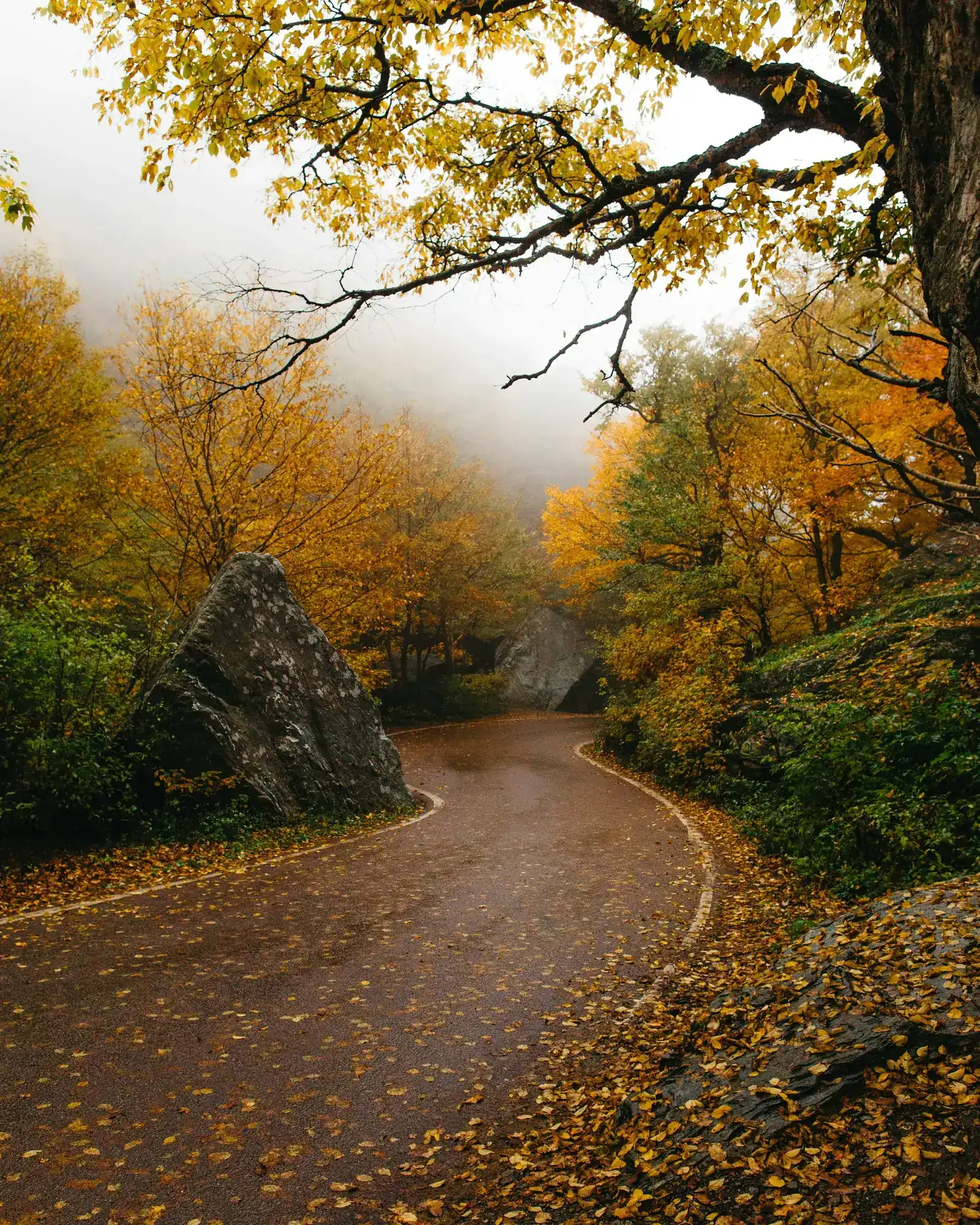
Vermont and upstate New York are unusual in offering a dense network of both quiet paved roads and maintained dirt roads in the same area, which is why the region keeps coming up in this comparison. The dirt roads there are generally described as hardpack rather than loose gravel, which puts them nearer the better end of the rolling resistance range, and the terrain is consistently rolling rather than flat.
That is the limit of what I can tell you honestly. I have not ridden there, and the editorial policy on this site exists partly to stop me writing local knowledge I do not have.
Riders who have actually been there
The short version
- At 25 km/h and 85 kg, loose gravel costs roughly 69 W to asphalt's 23 W. The surface is one of the biggest terms in the equation, not a detail.
- Gravel also makes your power spiky, drops your cadence, and puts real work through your upper body.
- Train gravel with over-unders, low-cadence torque work in simulation mode, standing repeats and surge-y endurance rides.
- Train road with sustained blocks and long climbs ridden whole.
- Plan gravel at about two thirds the distance you would ride on tarmac for the same day.
- Air resistance overtakes rolling resistance at about 15 km/h on tarmac and about 24 km/h on gravel, which is why tyres matter more than position on gravel and the reverse on road.
- Handling, vibration and tyre choice do not transfer from indoors at all.
About this article
Written by Christian Lassen Dam, who rides Zwift himself and builds every calculator on this site. Numbers here are either measured, and then linked to where they were measured, or modelled and estimated, and then labelled as such in the text. Spotted something wrong? Tell me and it gets corrected - the editorial policy explains how.
Related Articles
Continue reading with these related articles and guides:
Time of Day and Your Zwift Power: Finding Your Own Peak
Your power is not the same at 6 AM as at 6 PM, but nobody can tell you how large your own swing is. What actually moves across the day, why it moves, and a six-session protocol that measures the effect on you rather than on a study population.
What a Fixed Bike Does to Your Body That the Road Does Not
Outdoors you shift position constantly without noticing. Indoors the bike cannot move, so you stop moving too. What that does to your hands, knees, neck and lower back over a winter, and the changes that actually help.
Periodisation for Indoor Riders: Planning a Season on Zwift
Riding hard every week stops working after about two months. The three time scales a plan has to handle, a worked sixteen-week structure, how to plan backwards from a climb attempt, and why a permanent sweet spot block is the most common way to stall.
Power-to-Weight Ratio: Why It Decides Climbs and Little Else
Watts per kilogram predicts climbing speed because on a steep gradient nearly all your power goes into lifting your own mass. Where that stops being true, the two ways to move the ratio and why they are not equal, and the point at which chasing it backfires.
Run your own numbers
Every calculator on this site runs in your browser and publishes the equation behind it: