Zwift is one of the best training tools endurance athletes have ever had. It can make you fitter. It can make you more consistent. It can keep you moving through winter, darkness, rain, stress, and busy weeks that would normally break your routine.
But Zwift can also quietly give you blind spots.
Not because Zwift is "bad." It's because indoor training is a controlled world. And real performance - especially if you ride outside, run, train for triathlon, or travel and try to stay fit on the road - doesn't happen in a controlled world.
It happens in wind, rain, heat, surprise hills, bad roads, tired legs, and mornings where you didn't sleep well. It happens when you have to make decisions, handle the bike, eat on the move, and stay calm when the day is messy.
So let's do this properly.
This isn't a "Zwift vs outdoor" argument. It's a practical guide to becoming a stronger, more complete athlete by understanding:
- what Zwift can build extremely well
- what Zwift can't build on its own
- how running, nature, travel, food, and adventure fill the gaps
- how to combine it all without overcomplicating your life
If you use Zwift wisely, it can be a superpower. If you rely on it blindly, you can become strong but unprepared.
Let's make sure you get the superpower.
What Zwift can teach you (and why it works so well)
Zwift is unbeatable at a few key things. This is why it works.
Steady effort without excuses
Indoors, the terrain is honest. There is nowhere to hide.
Outside, you can accidentally (or intentionally) soften the effort:
- coasting into corners
- easing for traffic
- micro-resting on gentle downhills
- getting distracted by scenery
- stopping at intersections
Inside, you are either pedaling or you're not. That makes steady work simpler and often more productive.
This is why Zwift is so good for building:
- aerobic base
- sustained tempo
- threshold durability
- climbing strength (even if it's "virtual climbing")
High-quality intervals you can repeat weekly
One of the biggest problems with outdoor interval training is inconsistency. Even if you try to do the same workout, the day never matches perfectly.
Outside, intervals get disrupted by:
- traffic lights
- cars
- wind direction
- road surface
- hills you didn't plan for
- temperature changes
- "just one more hill" temptation
Zwift lets you repeat a workout in nearly identical conditions. That's a gift. Repetition is how the body adapts. If you can do a session consistently, you can track progress and build confidence.
Time efficiency
Zwift saves time in ways people underestimate.
A solid Zwift ride can be:
- no travel time to roads
- no stop-start sections
- no "getting to the good part"
- no mechanical surprises
- no weather planning
For athletes balancing training with studies, work, family, or travel, this is massive. It can turn "I have 45 minutes" into a meaningful session instead of a rushed compromise.
Pacing discipline (when you take it seriously)
On Zwift, pacing becomes clearer:
- you can see power and effort instantly
- you can hold a target without terrain surprises
- you can learn what "too hard early" feels like
This matters for triathlon and long-distance cycling. If you can hold steady power indoors, you're building the mental and muscular pattern needed for long events.
Community and motivation
This sounds soft, but it's real.
Group rides, races, events, and structured plans can:
- reduce loneliness
- make hard training feel like a game
- give you a reason to show up
For some athletes, that social pull is the difference between consistent training and drifting.
So yes - Zwift can absolutely make you stronger. For many people, it's the reason they got fit at all.
But now we need to talk about the gaps.
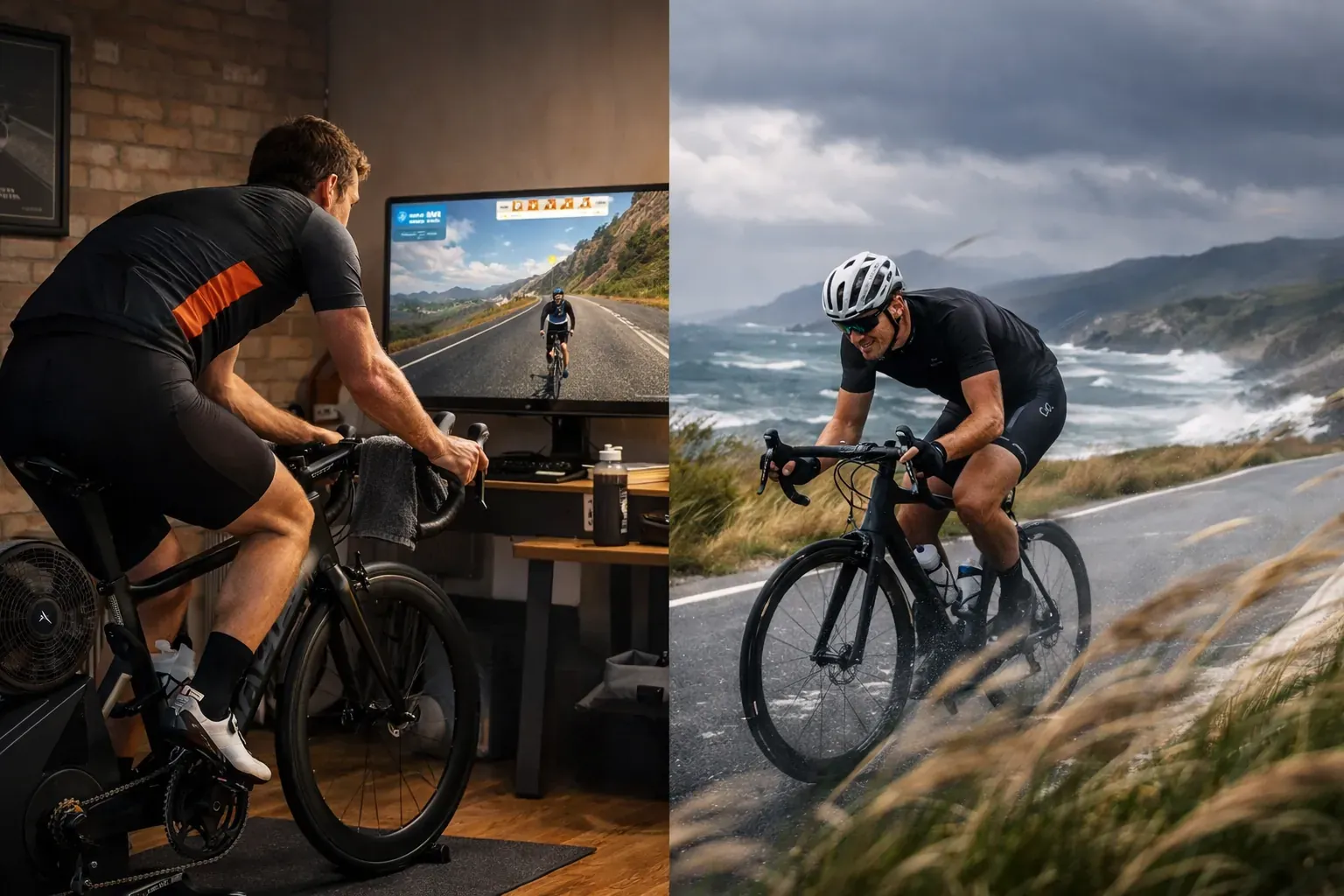
What Zwift can't teach you (but real life demands)
Zwift makes you fitter inside a stable environment. Outdoors is unstable. That difference creates missing skills.
Handling and "bike feel"
Zwift can't teach you how a bike behaves in the real world.
Outdoors, you must manage:
- cornering at speed
- braking smoothly
- riding in a straight line under fatigue
- looking behind you safely
- bunny-hopping small obstacles (or avoiding them)
- riding on wet roads, gravel, uneven pavement
- reacting to sudden movement around you
If you spend too much time indoors, you can become:
- very strong in a straight line
- less confident in real conditions
This matters for safety and performance. If you ride tense, you waste energy. If you brake too often, you lose speed. If you fear corners or rough roads, you avoid the places that might actually make you better.
Wind and weather management
Zwift gives you the perfect day, every day.
Outdoors, you get:
- headwind that turns flats into fights
- crosswind that forces attention and control
- rain that changes braking distance
- cold that numbs hands and makes eating hard
- heat that spikes heart rate
- unpredictable gusts that ruin rhythm
Zwift can help your fitness. But it can't teach you how to:
- stay calm when your speed looks "bad"
- choose effort over ego
- adjust clothing so you don't freeze or overheat
- ride safely when grip and visibility change
Weather isn't a minor detail. It's a skill set.
Road awareness and decision-making
Real cycling is constant decision-making.
Even on a quiet route, you manage:
- positioning on the road
- reading traffic behavior
- anticipating hazards
- choosing when to push and when to back off
- staying alert without burning mental energy
Zwift doesn't recreate the mental load of real riding. That's why outdoor rides can feel harder even at lower power. Your brain is working.
The "unexpected" element
Outdoors, the day never goes perfectly.
You might face:
- a flat tire
- a missed turn
- a sudden storm
- a closed road
- a mechanical noise you can't ignore
- a bottle you drop
- a dog that runs out
- a climb you didn't plan for
The best athletes aren't just fit. They are adaptable. Zwift doesn't force adaptability the same way real life does.
Eating and drinking under real constraints
Fueling indoors is easy.
You can:
- grab food whenever you want
- eat with both hands if you need
- refill bottles instantly
- stop if something feels wrong
Outdoors, fueling is a performance skill:
- opening wrappers with cold hands
- drinking while staying stable
- choosing safe moments to eat
- carrying enough
- managing stomach comfort in heat or stress
If you do long events or long rides, this matters as much as fitness.
"Adventure strength"
This is a real category. It's not about watts.
Adventure strength is:
- being comfortable being uncomfortable
- staying steady when plans change
- managing fatigue while still making good decisions
- moving through nature with confidence
Zwift can't teach that because you can always stop, always step off, always be in control of the environment.
Outdoors - and especially travel and adventure - teaches you to keep going when it's not perfect.
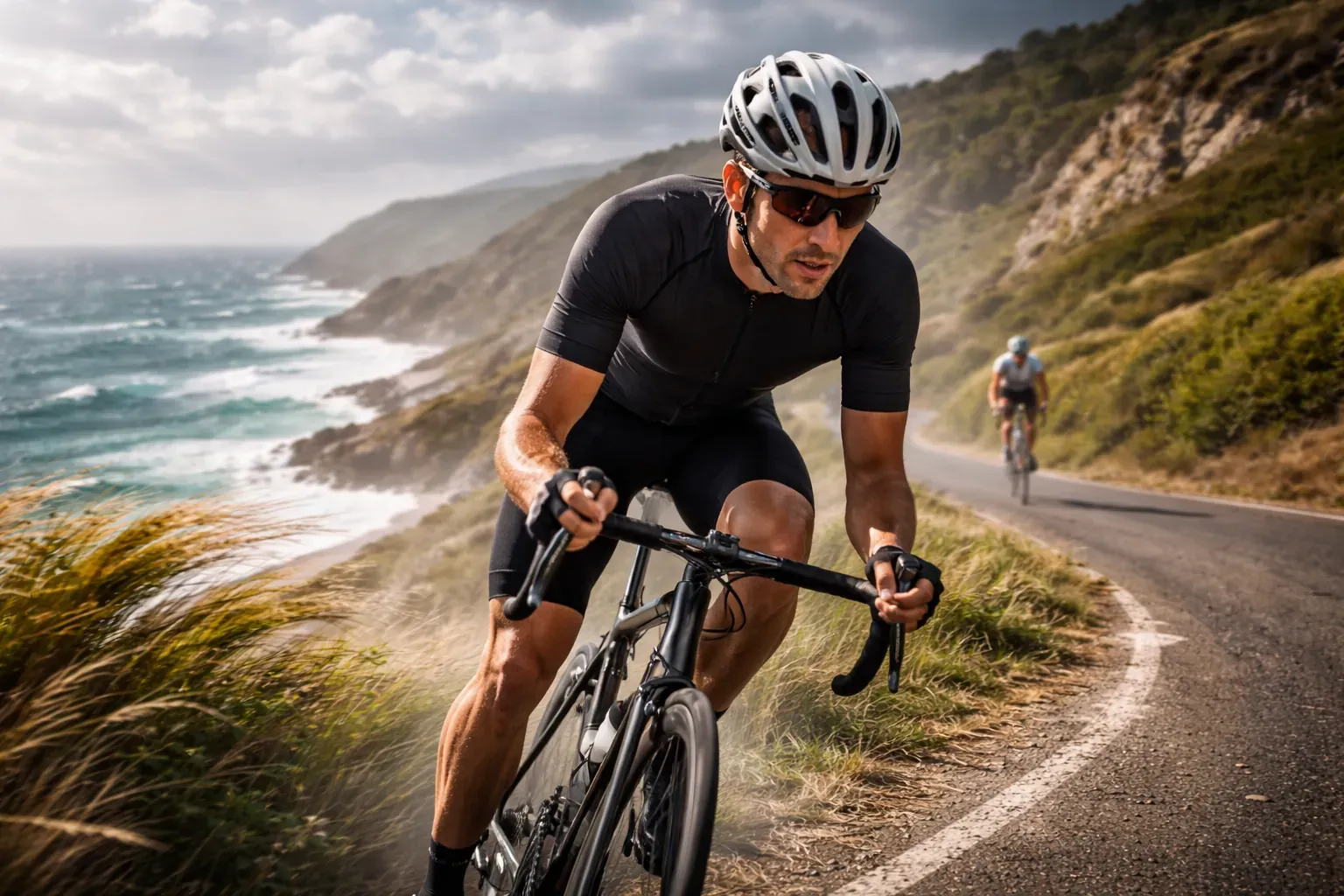
Running: the skill that upgrades your cycling brain
If you also run, you can use running to fill Zwift's gaps without forcing yourself to ride outside every day.
Running teaches things indoor cycling doesn't:
- how to pace by feel
- how conditions change performance
- how to accept slower pace without panic
- how to stay mentally steady when the body is uncomfortable
Why runners handle wind better
Most runners learn early:
- pace changes with heat, hills, wind
- effort matters more than numbers
- some days are just harder
That mindset transfers beautifully to cycling in wind. If you get frustrated by slow cycling speed on a windy day, think like a runner. You're not slow. You're running into resistance. Your job is to manage effort.
Running also reconnects you to nature
Zwift can feel like training in a box. Running - especially easy runs in parks, trails, or near water - can reset your brain.
That's valuable for consistency. When your mind is fresh, you train better indoors too.
Nature: the missing nutrient in purely indoor training
This might sound dramatic, but it's practical:
Nature is a recovery tool.
Not "recovery" like lying on the couch. Recovery like:
- lowering stress
- restoring motivation
- making your body feel like it lives in the real world
Indoor training can become repetitive. That repetition can dull your excitement. Outdoor time gives your brain variety.
If you're building long-term fitness - especially for triathlon - it's not just about the next workout. It's about staying in the game for months and years.
Nature helps you stay.
Food: performance, joy, and not turning into a robot
A lot of athletes make the same mistake: they treat food only as "fuel." Then training becomes joyless.
Yes, you need carbs for quality sessions. Yes, you need protein for recovery. But food is also part of:
- travel experiences
- adventure days
- long rides with café stops
- the emotional side of endurance sports
Zwift encourages a very controlled approach:
- measured bottles
- planned gels
- exact timing
That's useful. But outdoors (and especially while traveling), you need flexibility.
Real-world fueling that actually works
Instead of aiming for perfection, aim for:
- simple and repeatable choices
- foods your stomach trusts
- a mix of "sports fuel" and "real food"
Examples that travel well:
- bananas
- sandwiches
- rice-based snacks
- yogurt and fruit after training
- local meals that fit your needs without stress
The goal is to be the athlete who can eat well anywhere, not just in your own kitchen.
Travel: where Zwift can help, and where it can't
Travel is a stress test for training habits.
You lose:
- routine
- familiar routes
- comfortable timing
- predictable meals
- ideal sleep
Zwift can be a powerful tool while traveling if you can access a bike setup. It provides:
- structure
- time efficiency
- safety (no unknown roads)
But travel also exposes Zwift's limits, because travel is real life in concentrated form.
What travel teaches that Zwift can't
Travel teaches:
- adaptability
- decision-making under fatigue
- staying consistent without perfect conditions
- finding movement in new environments
If you only train in perfect conditions, travel can break you. If you learn to train in imperfect conditions, travel becomes part of your athletic identity.
Adventure training: the best kind of "cross-training"
Adventure doesn't have to mean extreme stuff. It can mean:
- a long ride in a new place
- a trail run in unfamiliar terrain
- a hike with a view
- exploring a city by foot
These days build:
- mental strength
- durability
- joy
And joy is a performance tool. People underestimate that.
The balanced truth: Zwift builds the engine, real life builds the athlete
This is the cleanest summary:
Zwift is excellent at:
- building fitness quickly
- creating consistent training
- improving sustained effort
- enabling high-quality intervals
Real-world riding, running, nature, and travel are excellent at:
- building skill and confidence
- developing adaptability
- improving decision-making
- teaching pacing under chaos
- keeping you mentally alive
You don't choose one. You combine them.
How to combine Zwift, outdoor biking, running, nature, food, travel, and adventure without overcomplicating everything
You don't need a complicated plan. You need a smart pattern.
Keep one "Zwift quality anchor"
A weekly Zwift session that always happens:
- threshold intervals
- tempo blocks
- climbing simulation
- race or group ride if that motivates you
This anchors fitness growth.
Keep one "outdoor reality ride"
Even if it's short, it keeps you connected to:
- handling
- wind
- real surfaces
- real decision-making
If weather is awful, replace it with:
- a run outside
- a long walk in nature
The point is real air, real sensory input.
Keep one "nature recovery session"
This is where you protect your mind:
- easy run in a park
- trail jog
- hike
- relaxed spin in a scenic area
No pressure. Just movement and place.
Keep food simple and consistent
Don't overthink nutrition. Use a basic approach:
- carbs around harder sessions
- protein daily
- enough total calories to support training
- practical travel-friendly meals
And allow joy:
- café stop rides
- local food while traveling
- meals that make training feel like a lifestyle, not a punishment
Make travel training flexible, not fragile
If you're traveling:
- do short sessions more often
- prioritize consistency over perfect workouts
- use running as the default option
- use Zwift/gym bike for one "hard" session if available
- turn exploring into easy aerobic time
The athlete you want to become
There's a specific kind of athlete who performs well everywhere:
- strong enough to push hard indoors
- calm enough to ride in wind without ego
- skilled enough to handle the bike safely
- flexible enough to train while traveling
- grounded enough to enjoy nature
- disciplined enough to fuel well
- relaxed enough to not become obsessed
Zwift can help build that athlete, but only if you understand what it can't give you.
Use it as a tool, not as a substitute for reality.
Because fitness is not the goal.
The goal is becoming the kind of person who can ride, run, explore, and feel capable anywhere.
That's what adventure is.
And that's what training is really for.
About this article
Written by Christian Lassen Dam, who rides Zwift himself and builds every calculator on this site. Numbers here are either measured, and then linked to where they were measured, or modelled and estimated, and then labelled as such in the text. Spotted something wrong? Tell me and it gets corrected - the editorial policy explains how.
Related Articles
Continue reading with these related articles and guides:
Time of Day and Your Zwift Power: Finding Your Own Peak
Your power is not the same at 6 AM as at 6 PM, but nobody can tell you how large your own swing is. What actually moves across the day, why it moves, and a six-session protocol that measures the effect on you rather than on a study population.
What a Fixed Bike Does to Your Body That the Road Does Not
Outdoors you shift position constantly without noticing. Indoors the bike cannot move, so you stop moving too. What that does to your hands, knees, neck and lower back over a winter, and the changes that actually help.
Periodisation for Indoor Riders: Planning a Season on Zwift
Riding hard every week stops working after about two months. The three time scales a plan has to handle, a worked sixteen-week structure, how to plan backwards from a climb attempt, and why a permanent sweet spot block is the most common way to stall.
Power-to-Weight Ratio: Why It Decides Climbs and Little Else
Watts per kilogram predicts climbing speed because on a steep gradient nearly all your power goes into lifting your own mass. Where that stops being true, the two ways to move the ratio and why they are not equal, and the point at which chasing it backfires.
Run your own numbers
Every calculator on this site runs in your browser and publishes the equation behind it: